CURATED EXHIBITION

CURATED EXHIBITION
when Art becomes Research
As human activities move towards longer stays in orbit and, in the future, on other celestial bodies, new disciplines are entering the conversation about how these places should be conceived. Art is one of them.
The work presented at BEX is part of a broader investigation into the relationship between human beings, perception and future space habitats. It explores an emerging territory where artistic research meets science and technology to ask questions that cannot be answered by engineering alone.
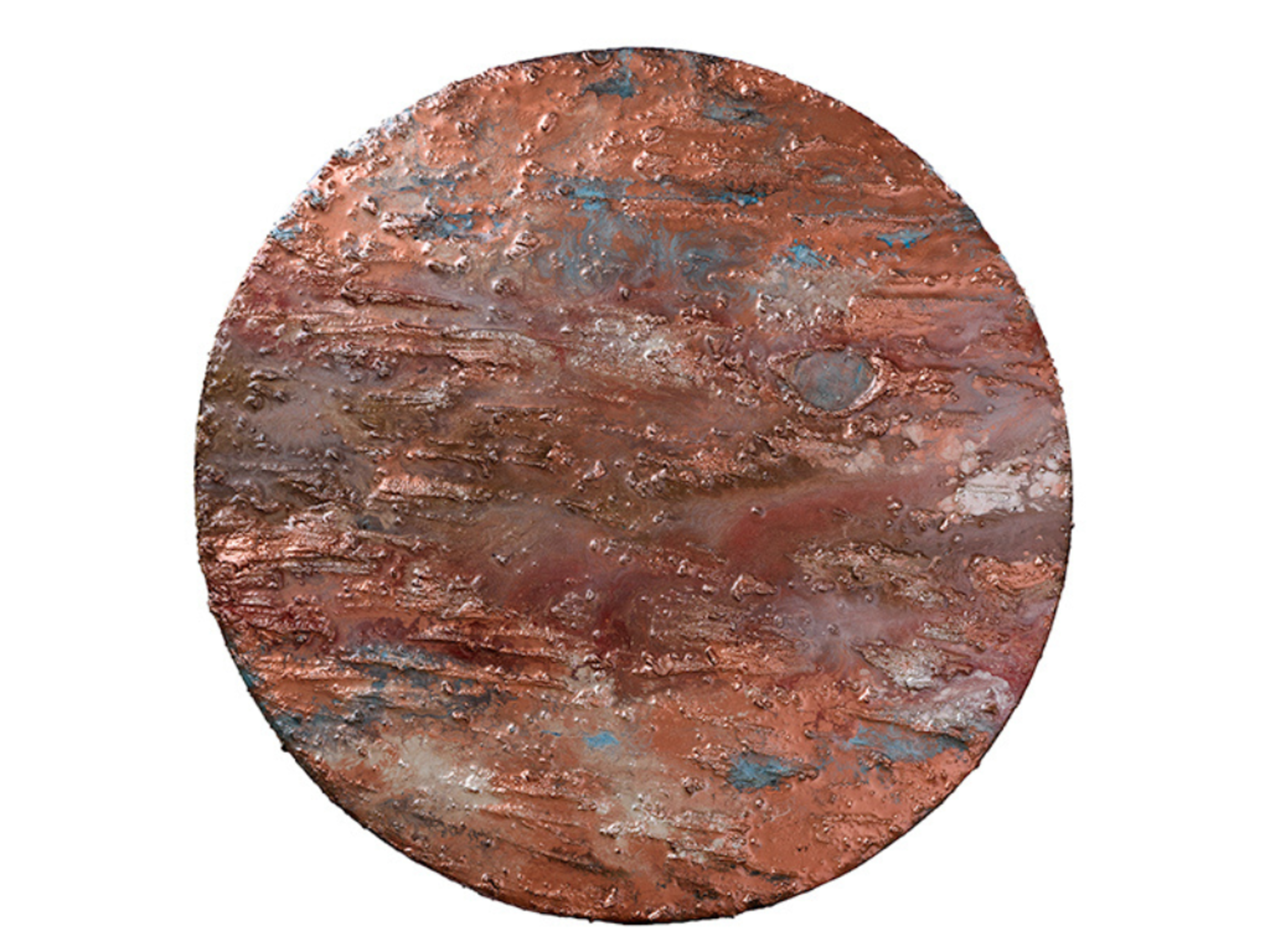
OF201
There is a planet out there, holding a mystery…
In the extreme silence beyond Neptune, when even the orbits seem to sleep, there it appeared: OF201, wrapped in a fiery mantle, perhaps too red for a world so far away.
And yet, among those glowing veins, a longing for blue struggles to emerge — like a submerged memory, like a dream searching for space among the flames.
It did not follow the dance of the others.
It did not fall into line.
It appeared by chance — or by choice — and ever since, it has been disrupting theories, laughing at models, hiding in the margins.
It is young.
It is mischievous.
It is the unexpected variable.
Watching you from afar, it whispers:
“What if you got it all wrong?”
.
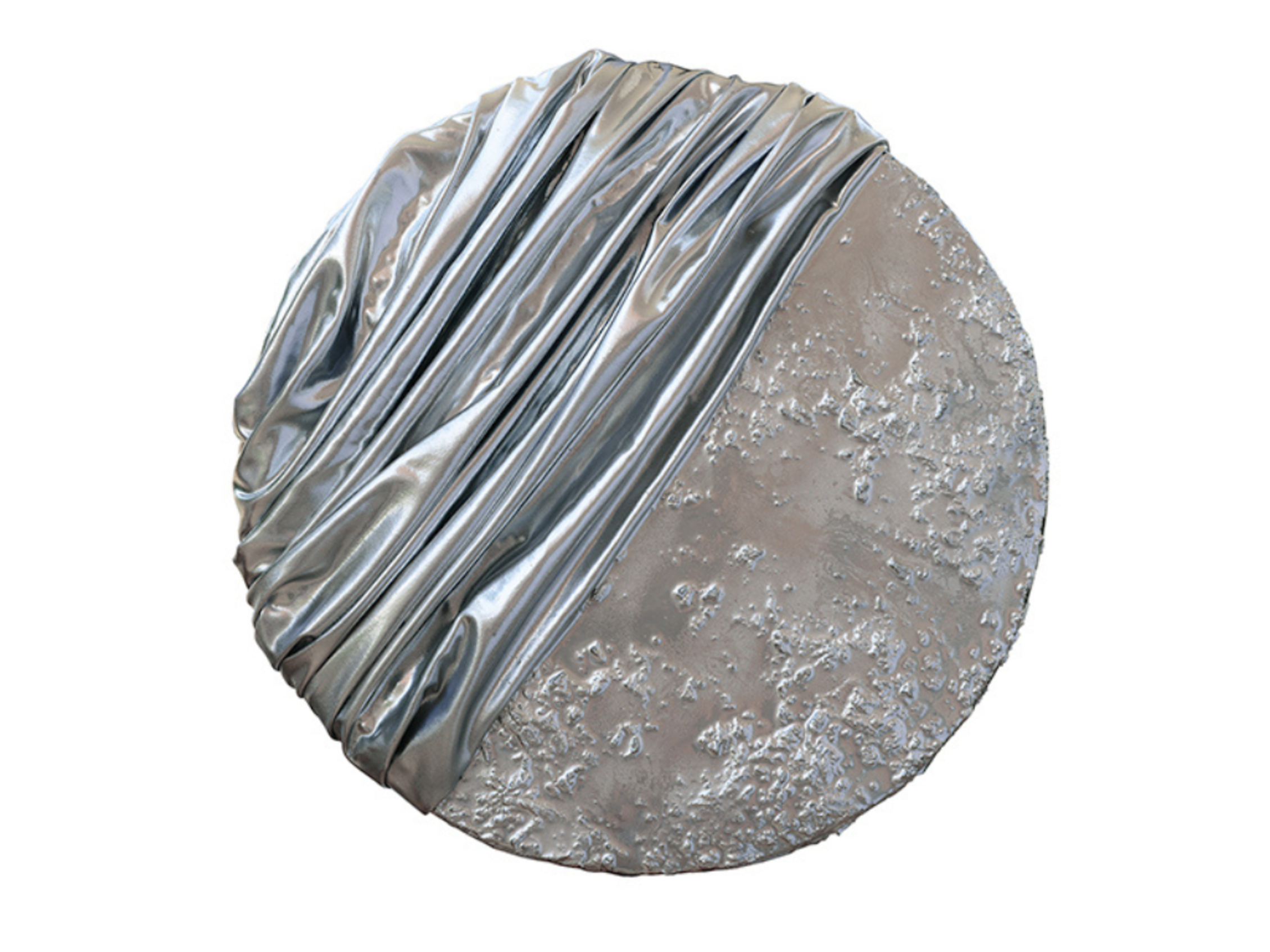
PLANET NINE
The planet that isn’t there — or isn’t there yet
In the silent dance of the cosmos,
a celestial body escapes our gaze.
It does not deny its presence,
but keeps itself veiled.
An absence with weight,
a presence brushing against the edge of reality.
Perhaps it exists.
Perhaps it is watching us from a distant orbit,
hidden behind a curtain of light and mystery.
It is the planet that isn’t there,
and yet we imagine it, we calculate its path,
we wait for it.
As we wait for someone
who has chosen to remain unseen.
.
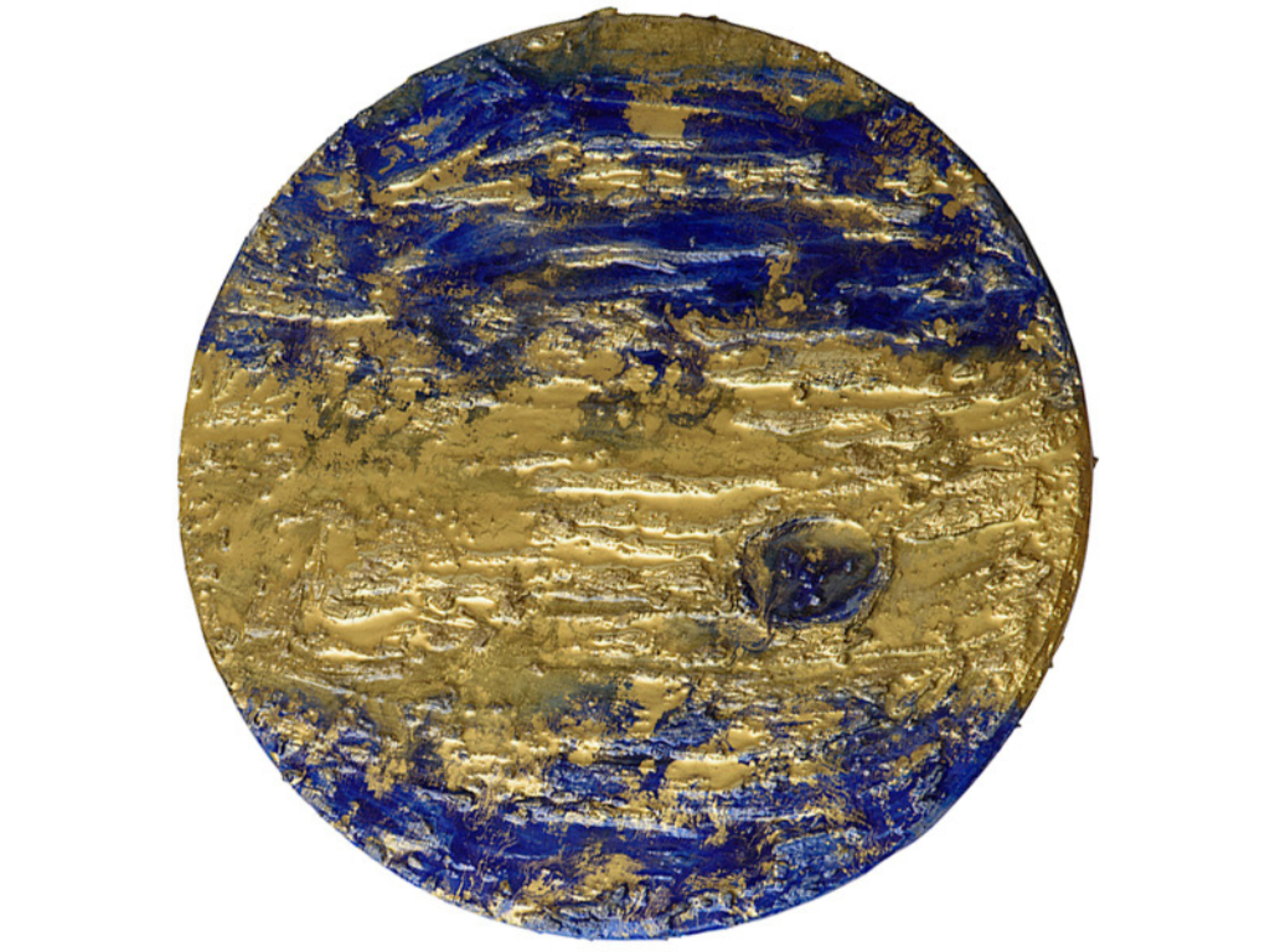
GOLD JUPITER
Jupiter, king of the heavens, does not govern: he reigns
Wrapped in a mantle of lapis lazuli and gold,
he rises like an ancient god who has crossed the millennia
to keep watch over the cosmos still.
His eye, an eternal storm, is his seal:
a gaze that watches and judges,
silent and absolute.
Around him, moons like courtiers
dance in devoted orbits.
And beneath his splendour,
the laws of physics bow.
He is not a planet,
but a throne suspended between myth and matter.
Where the universe whispers,
Jupiter commands.
.
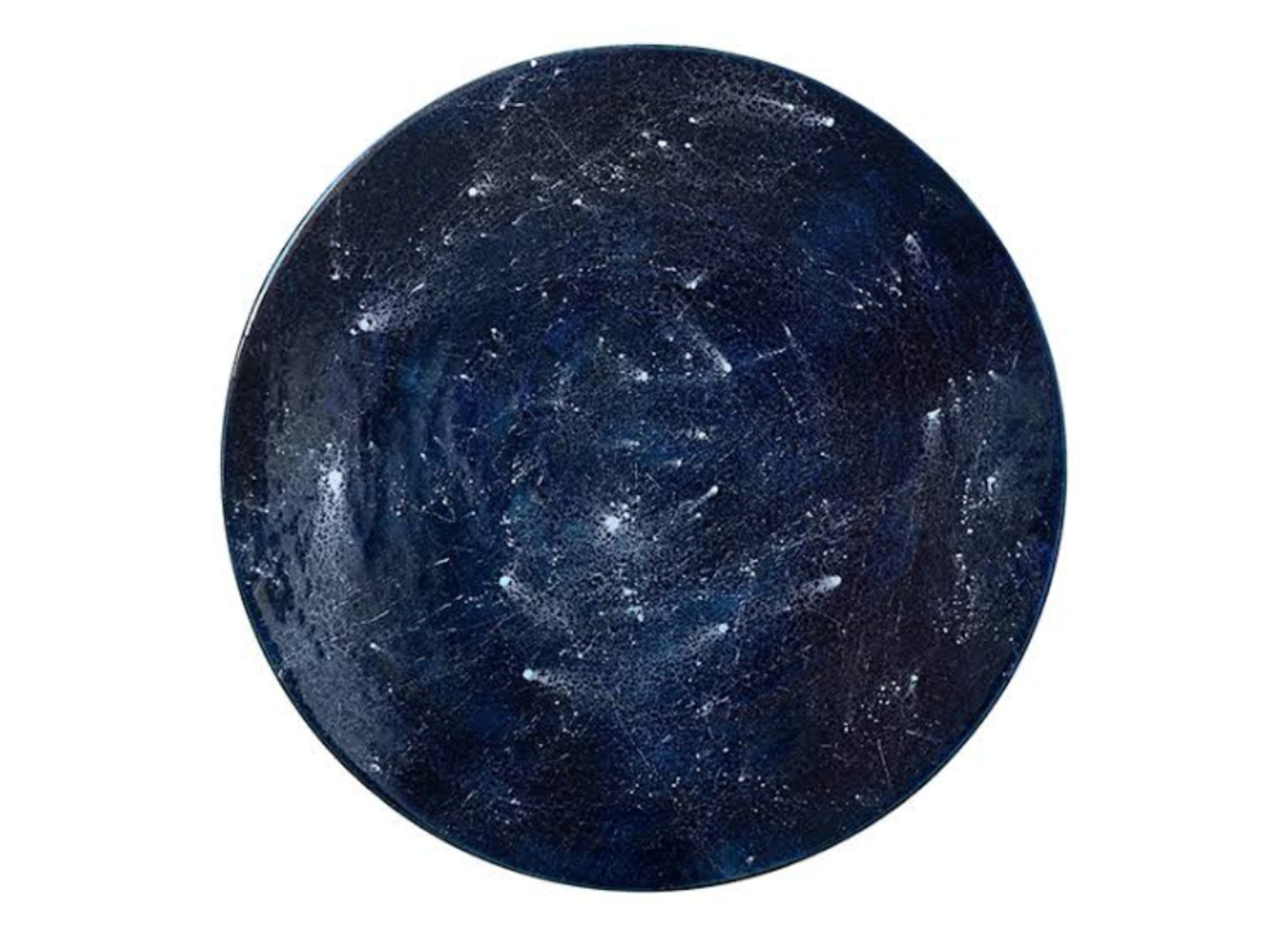
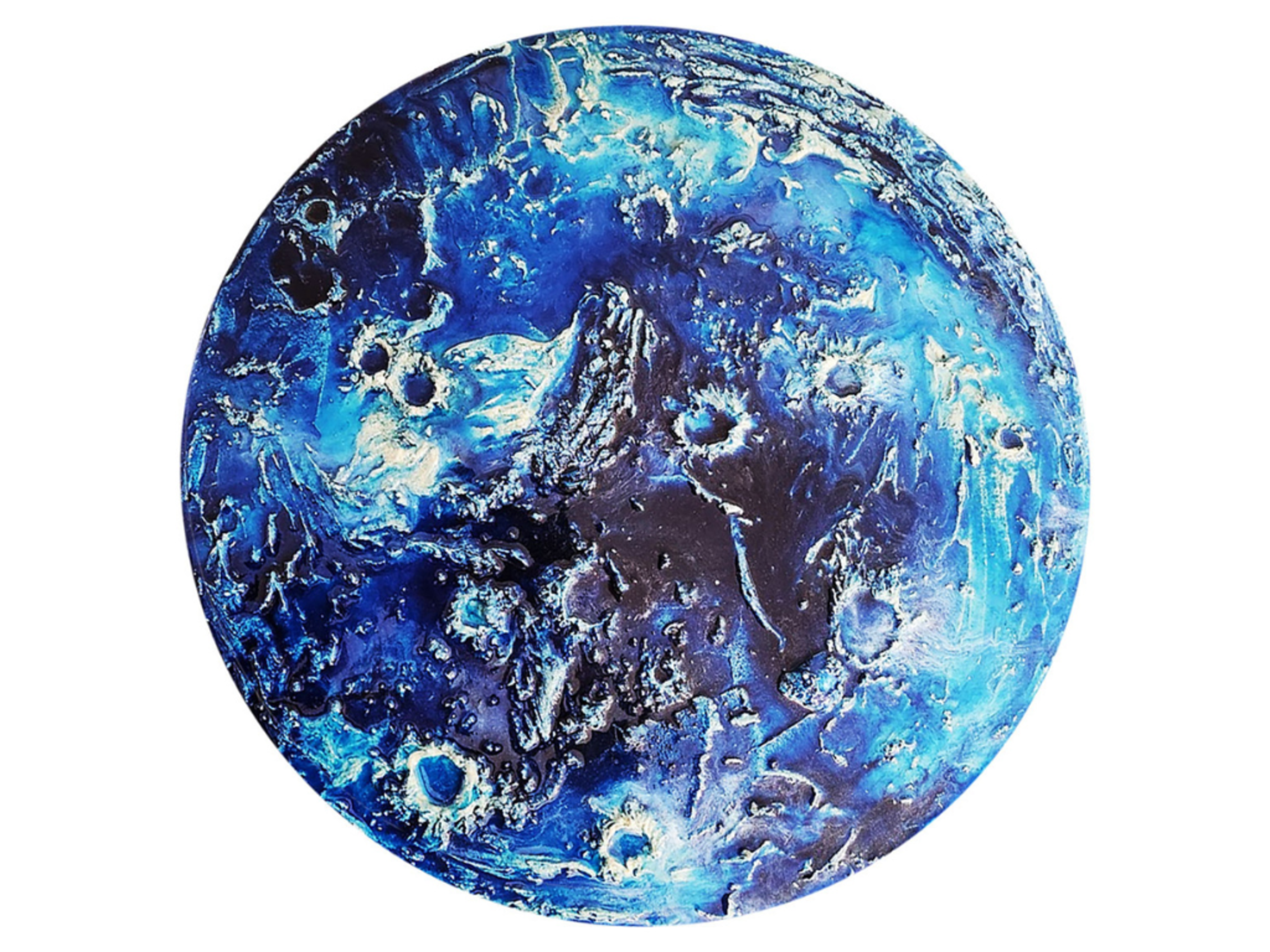
BLUE MOON
when the Moon dresses in blue
A circle of silent light, suspended between dream and mystery.
Blue Moon is a nocturnal apparition, a reflection of the invisible.
It does not portray the Moon as we know it, but the one we feel within us when we sense that we are part of the universe
.
MEET THE ARTIST
Stefania Camilleri
Stefania Camilleri’s path brings together two languages that are often considered separate: art and science.
Her background includes mathematics, physics and computer science, disciplines she also taught, while her artistic practice developed through watercolour, photography and experimentation with materials including resins, oxides, precious metals and rare earths.
.
EXOHUMANART
What happens when art enters the design of a space habitat?
ExoHumanArt moves the conversation from the artwork to the habitat itself.
The project investigates how art, science and technology can work together from the earliest stages of designing environments for human life in space, alongside fields such as architecture, engineering, medicine and psychology.
One of its key concepts is “carrying without weight.”
Launching physical objects and materials into space has practical constraints. But some experiences associated with Earth could potentially be translated into light, sound, images, adaptable surfaces, augmented reality and immersive technologies.
This opens up a field of experimentation around perception, memory, sensory stimulation and our relationship with the spaces we inhabit.
The approach is deliberately interdisciplinary and experimental: rather than assuming that art produces a specific psychological or physiological benefit, ExoHumanArt asks how these effects could be studied, measured and incorporated into future research.
The artwork, then, becomes a starting point.
The research begins with what happens to the person experiencing it