Microgravity changes the conditions in which the human body, technologies and everyday systems operate. Maintaining health, working, producing and consuming food, managing resources and designing what we wear therefore require solutions conceived for an environment fundamentally different from Earth. The Astronaut’s Home explores these conditions through a physical journey across the main dimensions of human life beyond Earth.
arrow_backarrow_forward
THE HUMAN FACTOR
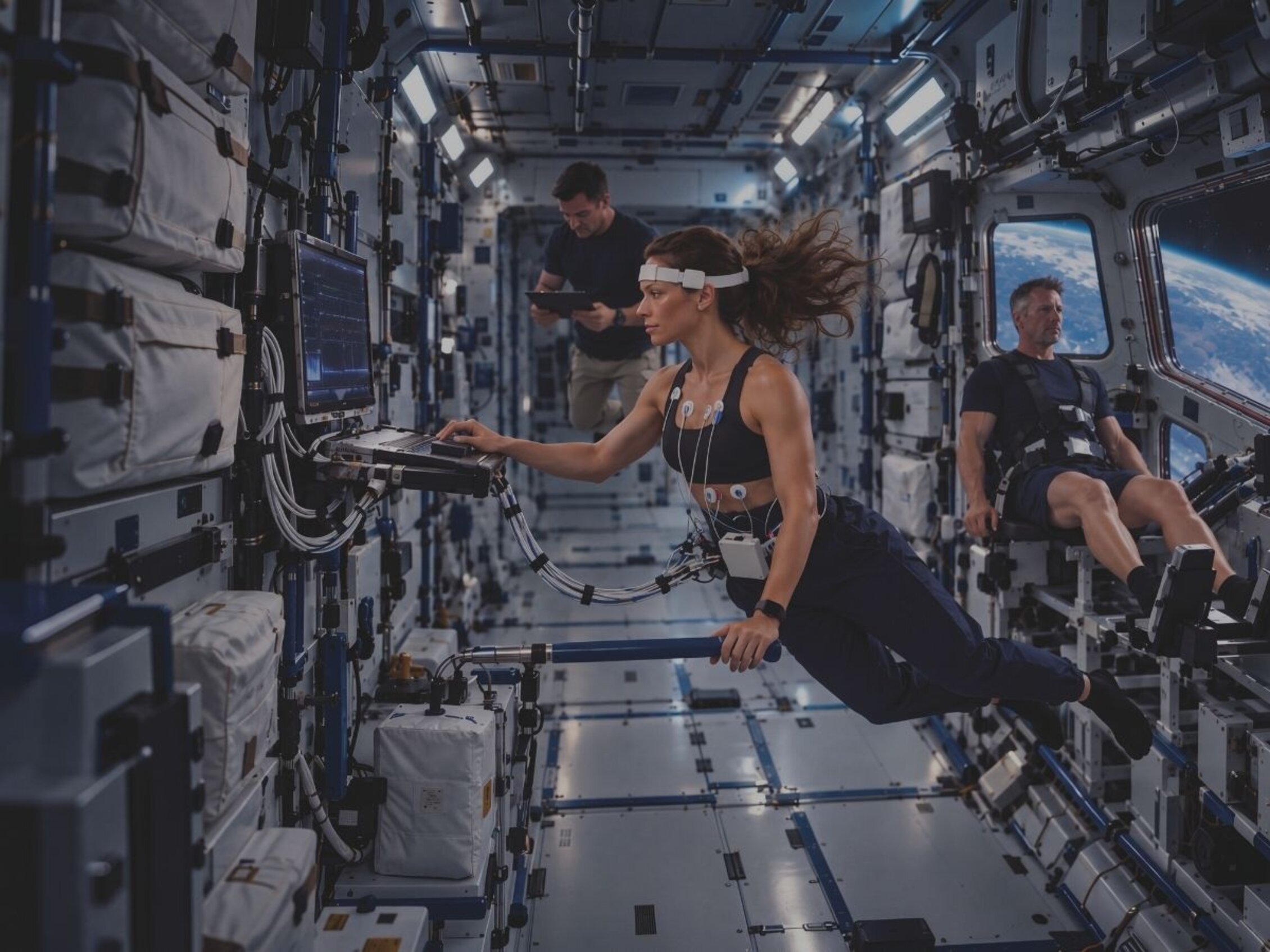
Training, medicine and physiological monitoring
Training, medical assistance and physiological monitoring come together in the Human Factor area to explore how human performance can be prepared, supported and monitored in extreme environments.
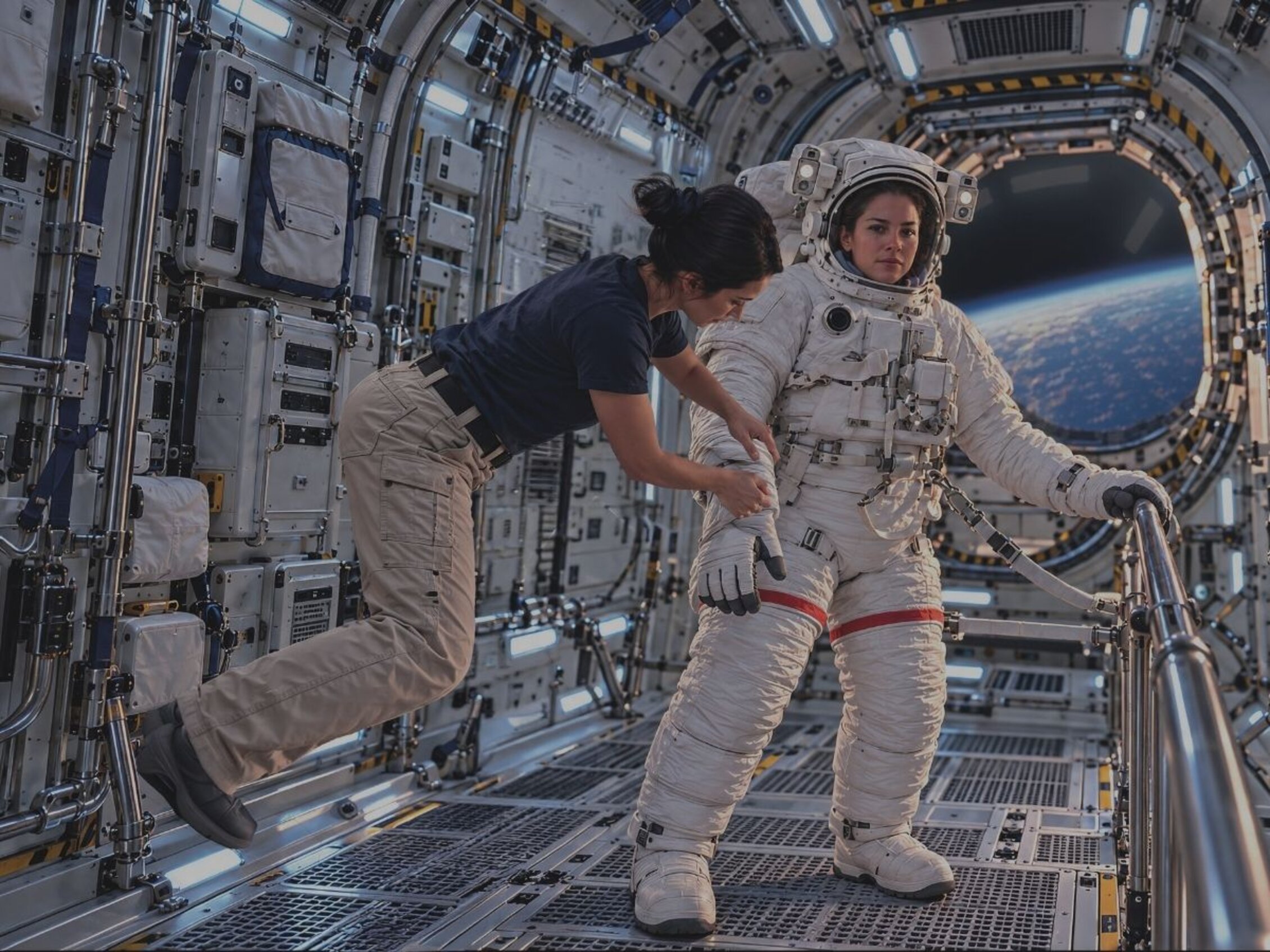
What happens when what you wear becomes part of the environment that protects you?
Astronaut suits and advanced textiles turn clothing into a wearable habitat, designed to support protection, movement and human performance in extreme conditions
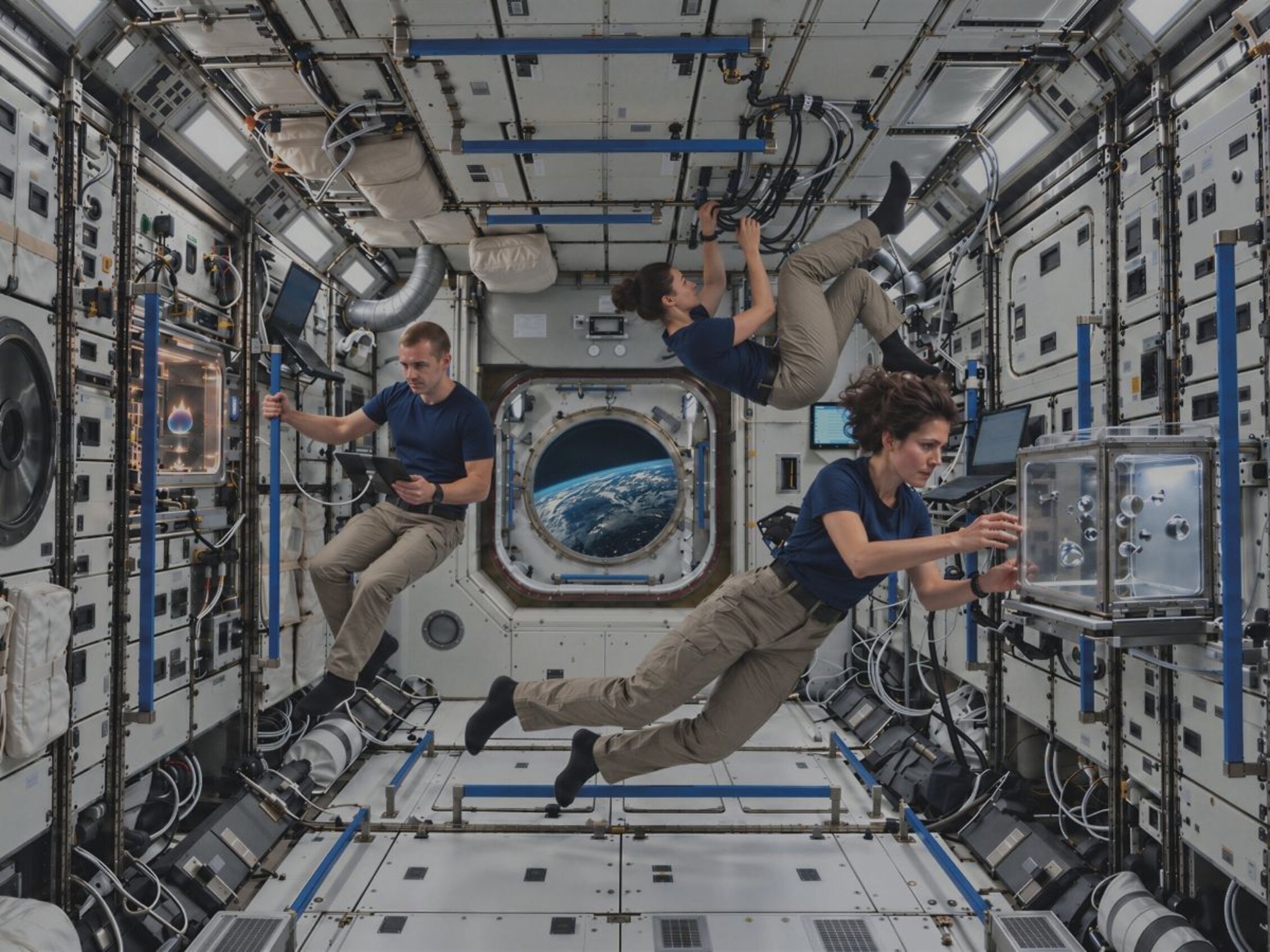
Research, life sciences and experimentation in microgravity
The Mission Lab explores microgravity as a research environment, where life sciences, materials and technologies can be studied, tested and developed under conditions impossible to reproduce in everyday life on Earth.
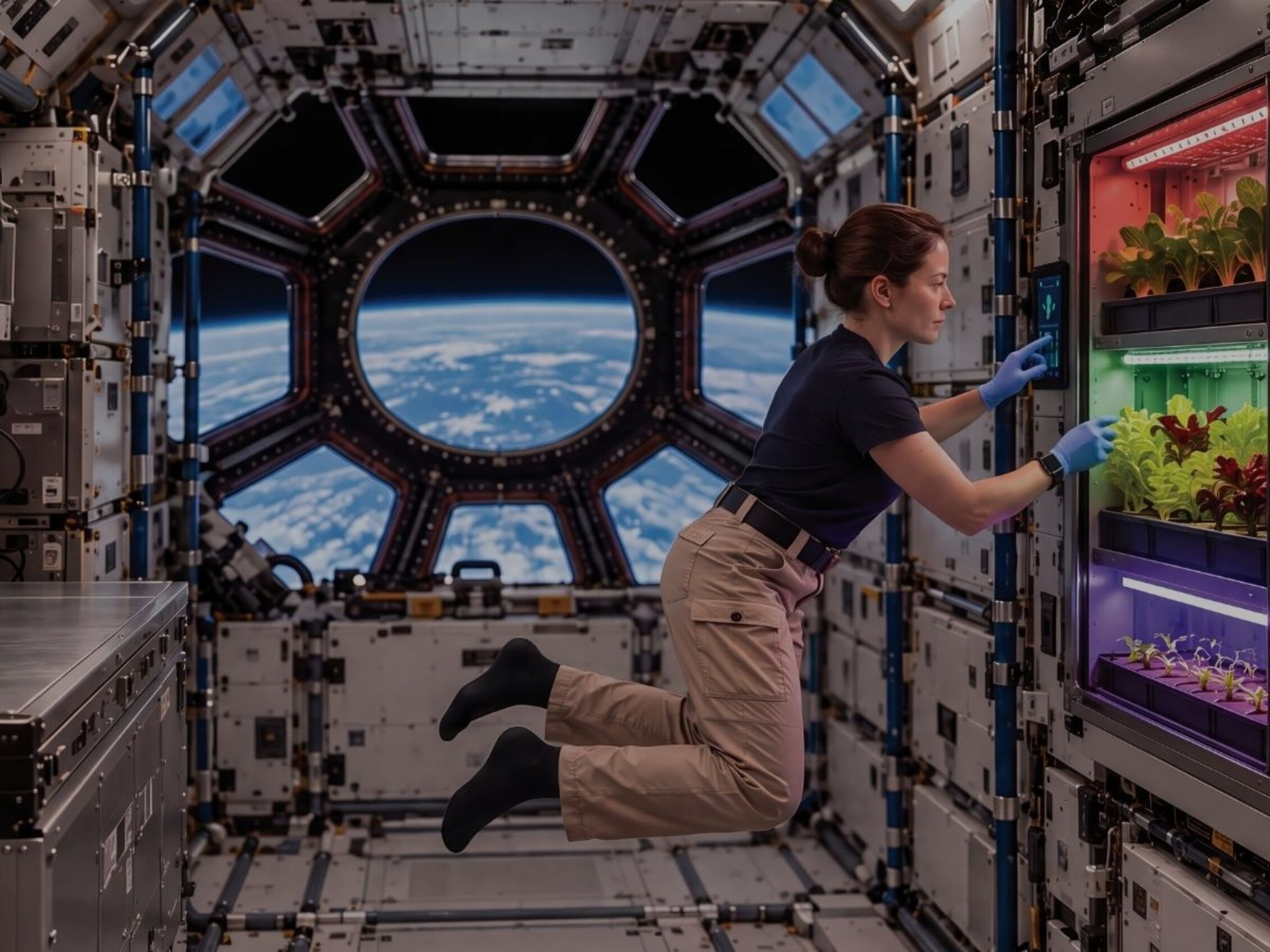
The Orbital Harvest explores how food can be grown, preserved and prepared for life beyond Earth, bringing together technologies and research designed to support longer and more autonomous human missions.
The Think Lounge brings the conversation inside The Astronaut’s Home.
Astronauts, researchers and industry experts share experiences and perspectives on how the human body and mind adapt, train and perform in space.
23 SEPTEMBER
24 SEPTEMBER
23 SEPTEMBER
4:00–4:30 PM
Living and Training in Microgravity: An Astronaut's Perspective.
A first-hand account of life in orbit with Col. Walter Villadei, exploring physical adaptation, everyday routines and the role of training in maintaining health and performance.
Guiding the conversations is Antonella Bellutti, Olympic champion and journalist, connecting the experience of elite sport with the challenges of human performance beyond Earth.
24 SEPTEMBER
3:30–4:00 PM The Ideal Mind Training
How do you train the mind to perform under pressure?
Walter Villadei, Riccardo Ceccarelli, Formula Medicine and NTT DATA explore mental preparation, stress management and the role of data and technology in extreme environments.
4:15–4:45 PM
The Role of Exercise: Lessons Learned from Microgravity
From physical conditioning to recovery: Walter Villadei and Silvano Zanuso, Technogym discuss why exercise becomes an essential countermeasure for preserving health and performance in microgravity.
<<Anyone who has lived through a mission knows that space tests people first, not just equipment. Staying healthy, training, and eating properly far from Earth calls for solutions born from the work of highly advanced, wildly different companies and research centers.
The Astronaut's House tells this story too, showing how technologies developed in space can end up improving life here on Earth.>>
Technical Partner
Technology, light & Experience Design
Knowledge Partner
We use cookies
Dear Visitor, this website uses profiling and advertising cookies, including "third parties" as independent data controllers, in order to send you promotions and offers of services in line with the preferences you expressed during your online browsing. You can accept these cookies by pressing accept and continue, or click "set my cookie preferences" to set your preferences, or you can press refuse and continue. For more information on our cookie policy click on the following link.
You can change your preferences at any time by visiting the "Cookie preferences" section at the bottom of the site page.Dear Visitor, this website uses profiling and advertising cookies, including "third parties" as independent data controllers, in order to send you promotions and offers of services in line with the preferences you expressed during your online browsing. You can accept these cookies by pressing accept and continue, or click "set my cookie preferences" to set your preferences, or you can press refuse and continue. For more information on our cookie policy click on the following link. You can change your preferences at any time by visiting the "Cookie preferences" section at the bottom of the site page.
Privacy Preferences Center
Manage consent preferences When you visit any website, this may store or retrieve information about your browser, largely in the form of cookies. This information may be about you, your preferences or your device and is used to a large extent to operate the site according to your expectations. Information usually does not identify you directly, but can provide a more personalized Web experience. As we respect your right to privacy, you can choose not to allow certain types of cookies. Click on the headers of the different categories to learn more and change the default settings. However, blocking certain types of cookies may have an impact on your experience of the site and the services we can offer. More information
These cookies are essential for the proper functioning of the site and cannot be deactivated in our systems because the experience of use and navigation of the website may be compromised. They are usually set only in response to actions you have taken that constitute a service request, such as setting privacy preferences, accessing or filling out forms. You can set your browser to block or have warnings about these cookies, but as a result some parts of the site will not work. These cookies do not store personal information. This category of cookies cannot be disabled
Name
Domain
Expiration
Description
PHPSESSID
www.bex-expo.space
End of session
PHP Session
AWSALB
www.bex-expo.space
7 days
Amazon web services
AWSALBCORS
www.bex-expo.space
7 days
Amazon web services
These cookies collect information in aggregate form on the number of users and on how they use the website. Analytical cookies are used to analyze and monitor the way in which the Site is visited (e.g. number of accesses and pages viewed). They help us know which pages are the most and least popular and see how visitors move around the site. All information collected by cookies is aggregated for statistical purposes to allow us to make improvements to the Site in terms of operation and navigation. If you do not allow these cookies, we will not know when you have visited our site.
Name
Domain
Expiration
Description
__atuvc
window.location.hostname
1 day
AddThis
Vuid
window.location.hostname
1 day
Vimeo
_gid
www.bex-expo.space
1 day
Google Analytics
__atssc
window.location.hostname
1 day
AddThis
__atuvc
window.location.hostname
2 years
AddThis
^_ga
www.bex-expo.space
2 years
Google Analytics
These cookies (which can be first or third party) are those used to profile the user based on his behavior on the site and therefore to create specific profiles of the user by showing him advertisements relevant to the preferences shown on the network by the user. They do not directly store personal information, but are based solely on the identification of your browser and your internet device. If you do not accept these cookies, you will receive less targeted advertising.
Name
Domain
Expiration
Description
_pin_unauth
www.bex-expo.space
2 years
Pinterest
_fbp
www.bex-expo.space
2 years
Facebook
_gcl_au
www.bex-expo.space
2 years
Google AdSense
yt.innertube::requests
addthis.com
1 day
Youtube
yt.innertube::nextId
addthis.com
2 years
Youtube
yt-remote-session-app
www.bex-expo.space
2 years
Youtube
yt-remote-fast-check-period
www.bex-expo.space
2 years
Youtube
yt-remote-device-id
www.bex-expo.space
2 years
Youtube
yt-remote-connected-devices
www.bex-expo.space
End of session
Youtube
yt-remote-cast-installed
www.bex-expo.space
1 day
Youtube
yt.innertube::requests
vimeo.com
1 day
Youtube
YSC
www.bex-expo.space
1 day
Youtube
VISITOR_INFO1_LIVE
www.bex-expo.space
2 years
Youtube
hubyt-remote-session-name
www.bex-expo.space
2 years
Youtube
Do you confirm your reservation for this event?
job_post.subscription.confirm?
Reservation confirmedReservation confirmed
No more slots availableNo more slots available
To reserve your place you must first register and/or log into the reserved area
Do you confirm that you want to cancel your reservation for this event?
precredit.unsubscription.confirmed
Do you confirm your participation? You will be requested to upload your CV in the next step
Do you confirm your participation? You will be requested to upload your CV in the next step